Which phone charging vending machine is best for your location?
High-frequency smartphone usage has made battery anxiety a widespread issue. Shared power bank rental stations address people’s rigid demand for mobile charging and have become an emerging commercial trend in the market. Many investors are entering the charging station power bank business, optimistic about its commercial potential.
Different venues have different requirements for the specifications and capacity of rental charging station power banks. If the charging station does not match the venue, it will negatively impact user experience and business revenue. How to scientifically select the right phone charging machine has become a key factor in achieving strong commercial returns.
This article analyzes venue characteristics, foot traffic, and other dimensions to provide decision-making references for deploying portable phone charging stations, helping investors reduce operational risks.
1.Why Does Venue Type Affect the Revenue of Public Phone Charging Stations?
To improve the revenue of mobile phone charging stations, operations must be refined according to venue type. Different venues have different user needs, consumption habits, and dwell times, all of which affect the usage frequency and turnover efficiency of phone charging stations.
Only by accurately analyzing venue characteristics and formulating customized deployment and refined operational strategies can business performance be improved.
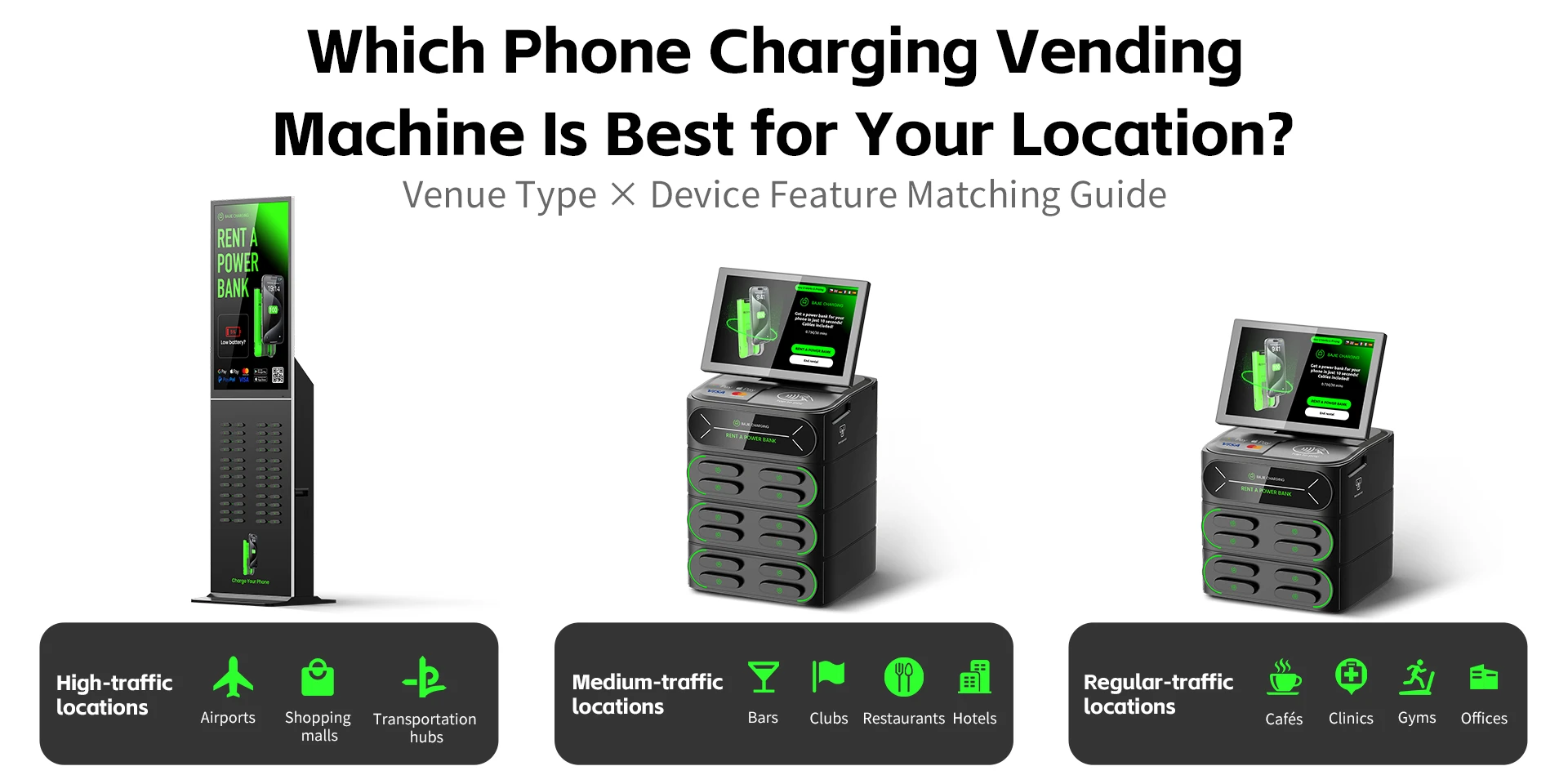
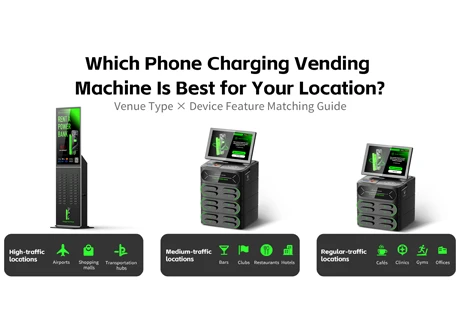
High-Footfall Venues: Airports, shopping malls, transportation hubs, These locations have heavy foot traffic, long waiting times, and high smartphone usage, resulting in strong and urgent charging demand. Airport passengers typically arrive 1–2 hours early, and with flight delays or transfers, dwell time can extend to 2–3 hours or longer, making phone charging essential.
Smartphone charging stations support cross-location returns, allowing users to rent at airports, shopping malls, or transport hubs and return the power bank flexibly across cities or regions. Users are no longer restricted to a single rental location and can plan their journey in advance, returning the power bank at a nearby location of the same brand at their destination.
This convenient and efficient rental experience increases user stickiness. The product features of public phone charging stations expand the service radius of the equipment, providing clear advantages for large-scale deployment of cell phone charging kiosk businesses.
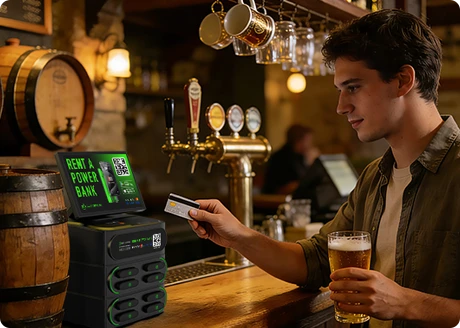
Medium-Footfall Venues: Bars, clubs, restaurants, hotels,These venues have stable foot traffic and long user dwell times, with intensive smartphone usage. Users require sustained battery life, and commercial charging stations provide an efficient emergency charging solution.
With the “rent and return anytime” model, power bank charging stations replace the inconvenience of carrying personal power banks, offering a lightweight and convenient charging service that meets users’ immediate charging needs.
Regular-Footfall Venues:Cafés, clinics, gyms, offices,Users typically stay for more than one hour. Mobile work, waiting in line, fitness tracking, and other activities continuously drain battery power, while these venues often lack easily accessible power outlets.
Phone charger rental has become a rigid solution to battery anxiety, providing consumers with convenient emergency charging services while creating stable and sustainable passive income for investors.
How Foot Traffic and Pricing Affect Revenue,Venue foot traffic, user dwell time, and rental frequency directly impact the revenue of a mobile charging kiosk business. Different scenarios allow for differentiated pricing strategies to improve profitability.
In high-traffic, high-turnover venues such as airports, prices can be increased by USD 2–3.Transportation hubs have dense foot traffic but are more price-sensitive, so more competitive pricing can be used to boost rental frequency and overall revenue.
For medium-footfall venues such as bars and restaurants, dynamic pricing can be applied based on time periods. During holidays or peak rental hours, prices can be increased by USD 0.5–1, remaining within acceptable user willingness to pay while generating higher portable power bank station revenue.
2.How to Deploy the Right Charging Station Vending Machine for Different Venues
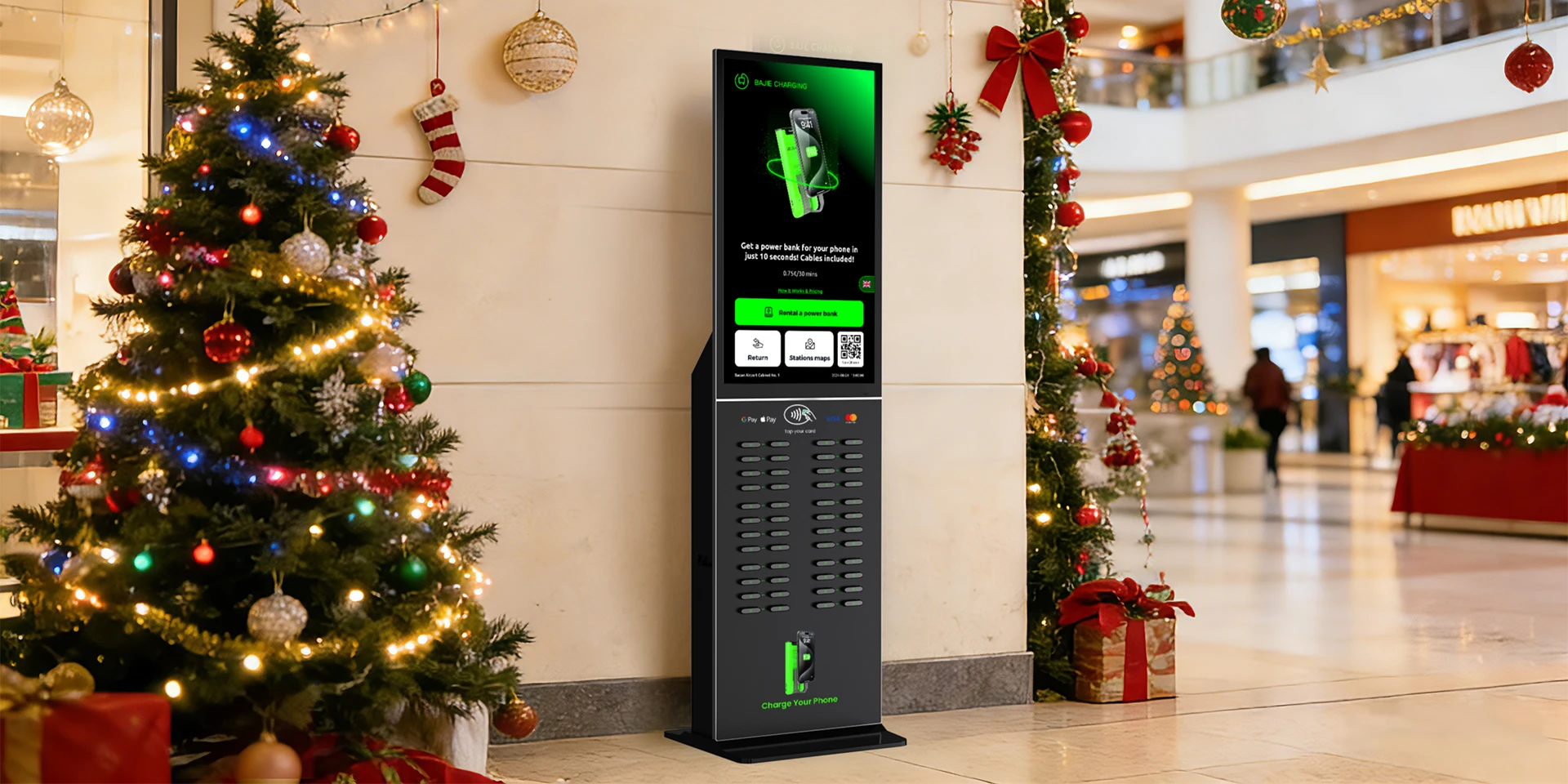
High-footfall venues should deploy large-capacity, multi-slot phone charger rental stations to meet frequent rental demand. If a station has too few slots, more devices are required to cover demand, increasing overall investment costs. Large-capacity charging stations enhance service capability and deliver better cost efficiency.
Large-capacity charging stations are available in multiple specifications, including 24-slot, 48-slot, 72-slot, 96-slot, 120-slot, 168-slot, and 216-slot ultra-large models. Higher slot counts cover broader user demand, reduce user loss caused by insufficient availability, and increase utilization rates, ultimately improving business revenue. These stations help investors achieve faster payback and long-term profitability, forming a healthy business cycle for charging station mobile operations.
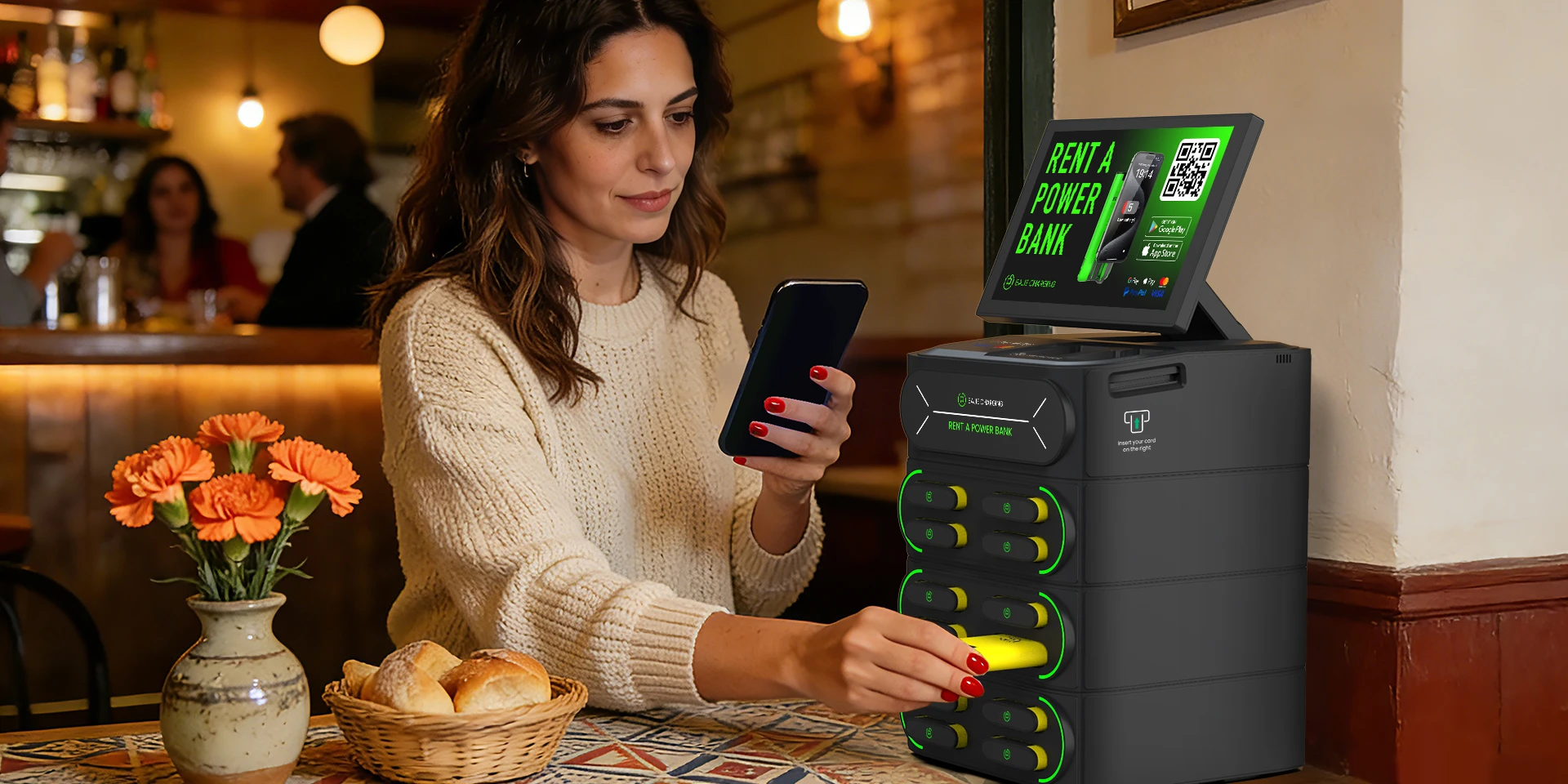
Medium-footfall venues are ideal for deploying general-purpose charging stations. Modular charging vending machines support flexible combinations, allowing configurations of 4, 8, 12, 16, 20, or 24 slots to precisely match venue needs.
For bars, clubs, restaurants, and hotels, a 12-slot modular charging station can be deployed initially, with capacity expanded later based on actual business performance. This on-demand deployment model helps control upfront investment and supports flexible expansion of the station power bank business.
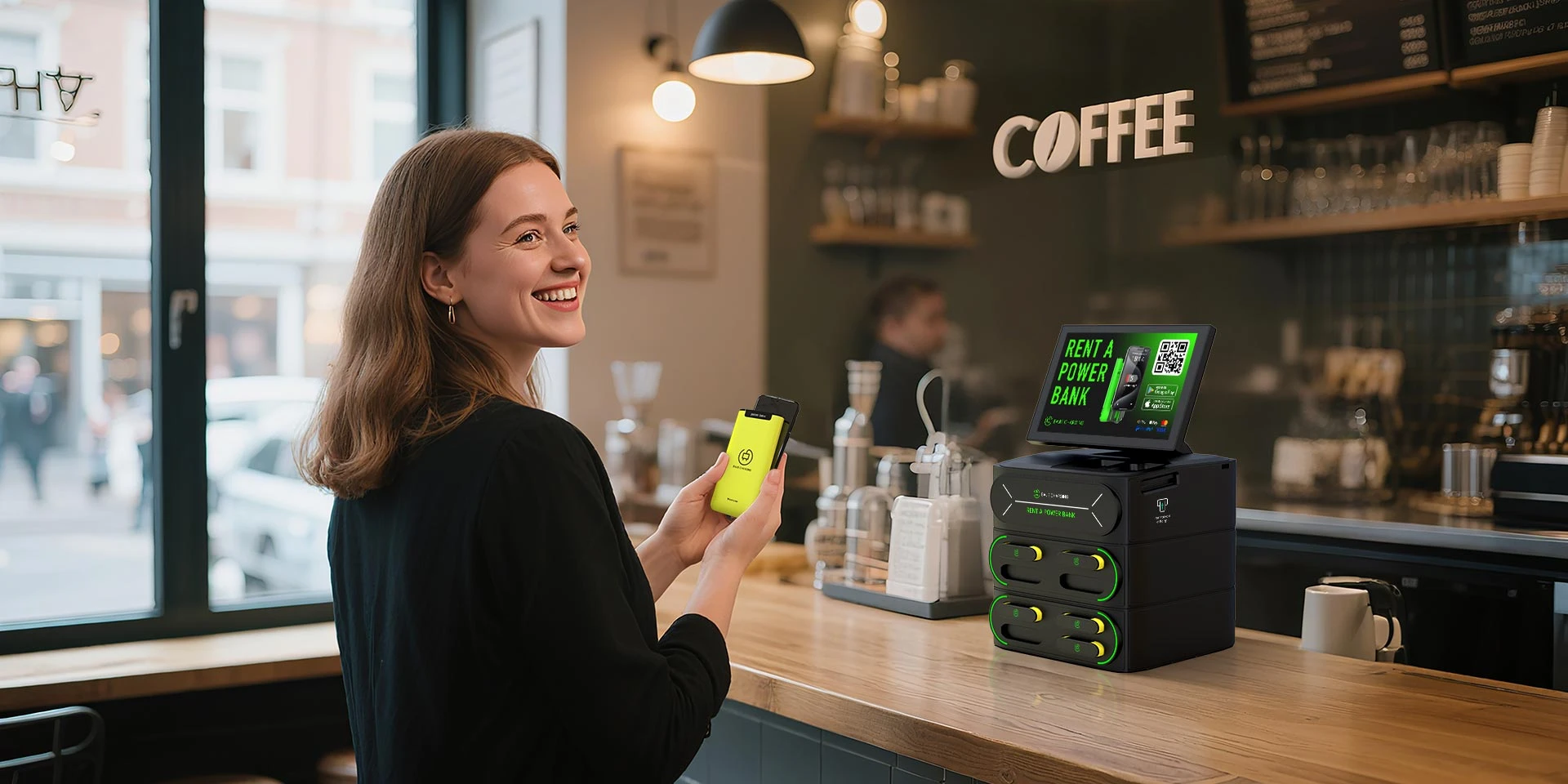
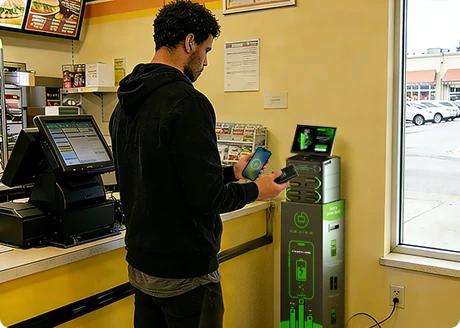
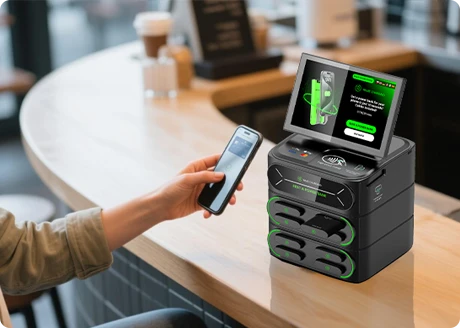
Regular-footfall venues such as cafés and clinics are well suited for desktop mobile cell phone charging stations. These units require no wiring and are plug-and-play, effectively meeting daily charging needs.To save floor space, they can be combined with floor stands, lightbox displays, or wall-mounted racks for flexible deployment.
Conclusion
High-footfall venues require large-capacity charging stations (such as 48-slot models) to handle concentrated, high-frequency charging demand and avoid order loss caused by insufficient slots. Although initial costs are higher, high turnover quickly amortizes the investment. In contrast, deploying multiple standard-capacity units across a venue often results in higher total costs.
Medium-footfall consumption scenarios, with longer dwell times and concentrated usage periods, are best suited for modular charging stations. Their flexibility allows capacity to be expanded gradually based on real rental data.
Regular-footfall venues are ideal for desktop charging stations. These occupy minimal space and can also drive foot traffic to stores via Google Maps, attracting users for rentals and returns, encouraging additional consumption, and increasing merchant willingness to cooperate.
Different foot traffic levels, user dwell times, and consumption environments require different types of portable power chargers. Blind deployment can lead to idle equipment or insufficient supply, negatively affecting portable power bank business revenue. Through precise matching and deployment strategies, investors can significantly improve their return on investment.
February 5, 2026
 What strategies can increase the revenue of a cell phone charging station?
 Global Phone Charging Station Market Trends and Growth Forecast for 2026
 How to correctly choose a power bank rental factory?
 2026 new safety standards: what compliance requirements must portable charger machine brands pay attention to?
 Which phone charging vending machine is best for your location?
 Which high-traffic scenarios deliver the best ROI for portable phone charging stations?