What strategies can increase the revenue of a cell phone charging station?
Power bank vending machines allow users to rent via QR code scanning or card payment, enabling them to recharge their mobile devices anytime and anywhere. As a convenient self-service charging solution, once operators launch a portable phone charging station business, how can they continuously increase revenue and achieve greater profitability?
How can operators lock in high-value locations through precise scenario positioning? How can refined operations improve the output of each location? This article, based on real operational cases, systematically outlines replicable core strategies in power bank station operations, providing operators with a structured revenue growth framework.
1.Which locations are high-value scenarios for power bank portable chargers?
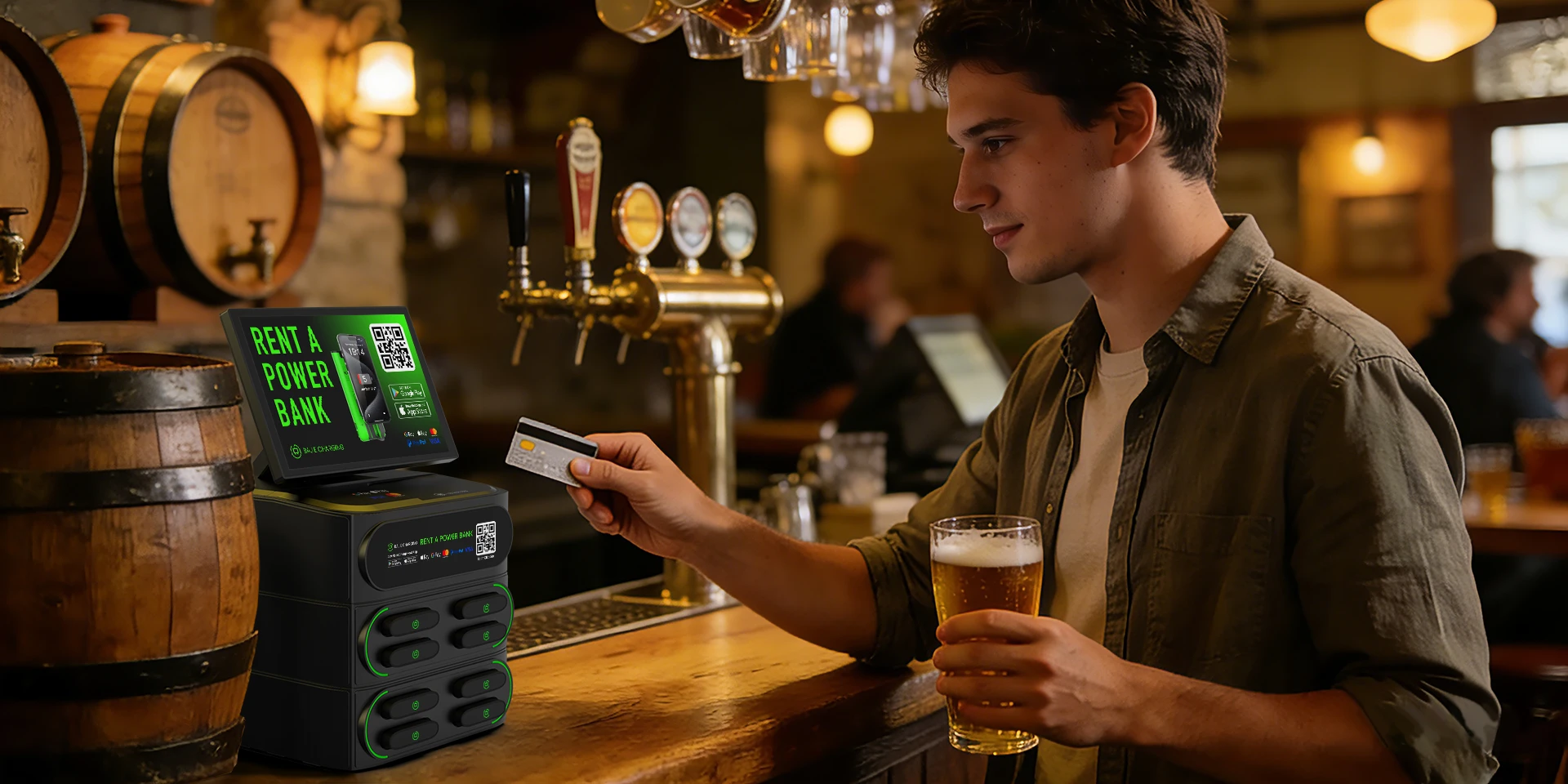
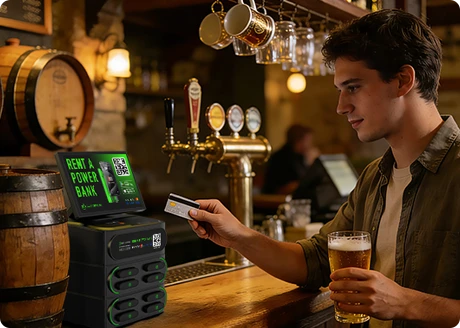
High-frequency, essential-demand scenarios: food & entertainment venues. Restaurants, bars, KTVs, and similar venues have long dwell times, typically over 1–3 hours. In social and entertainment settings, mobile phone usage is frequent, leading to fast battery consumption. In nightlife venues such as bars and KTVs, users rely heavily on their phones for extended periods, creating strong demand for emergency charging.
Portable chargers and power banks provide users with efficient emergency charging solutions. With the “rent-and-return anytime” feature, phone chargers eliminate the need for users to carry their own devices, offering a lightweight and convenient charging service that meets immediate power needs.
Emergency demand scenarios: transportation. hubs,Airports, train stations, bus terminals, and subways have massive foot traffic. Travelers often spend long waiting times and rely heavily on their phones for itinerary management, communication, or work. These locations often lack convenient power outlets, and a dead phone can directly impact travel, making users more willing to pay. Therefore, they are high-revenue deployment locations for mobile charging stations.
Mobile cell phone charging stations support flexible returns across cities and locations. Users can rent from one location and return at any nearby station of the same brand without needing to go back to the original point. This flexibility ensures a seamless user experience, allowing users to enjoy convenient charging without worrying about returns.
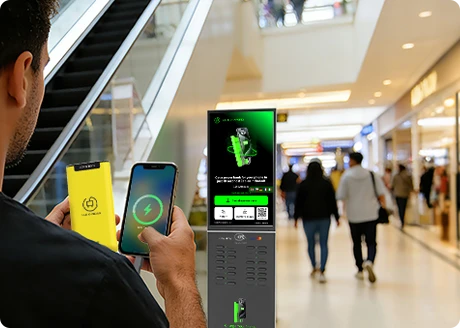
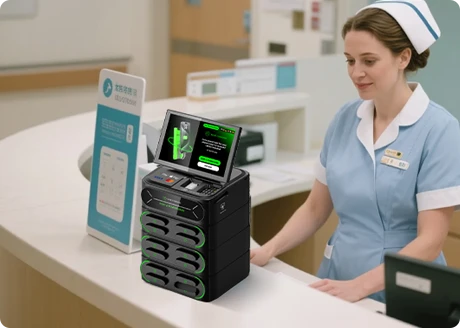
Long-duration rental scenarios: public service venues.Shopping malls and supermarkets have high foot traffic and long dwell times. Hospitals involve long waiting and caregiving periods, where charging demand is urgent. In tourist attractions, visitors spend entire days outdoors, using phones for photography and navigation, which consumes significant battery. The widespread deployment of power bank portable chargers in these public venues, combined with long usage durations, increases revenue per transaction.
High cash-flow scenarios: large events and exhibitions:Large-scale events such as music festivals and exhibitions attract massive crowds. From entry to exit, users spend long hours on-site, frequently using their phones for photos, videos, and social media. Few users carry power banks, creating strong temporary rental demand. With hourly pricing, longer rental durations mean higher revenue per order. These events are short-term but generate dense orders, allowing operators to deploy phone charging kiosks intensively and quickly recover cash flow.
2.How to improve location performance through refined operations?
Scenario-based deployment and optimized configuration:In space-limited venues such as restaurants and convenience stores, deploy display racks (standing or wall-mounted) to save space while efficiently integrating into high-traffic environments. In medium-traffic venues, modular charging stations allow flexible capacity expansion based on customer flow. In large-scale venues, deploy high-capacity stations (72-slot, 96-slot, or 216-slot units) to meet high-frequency demand.
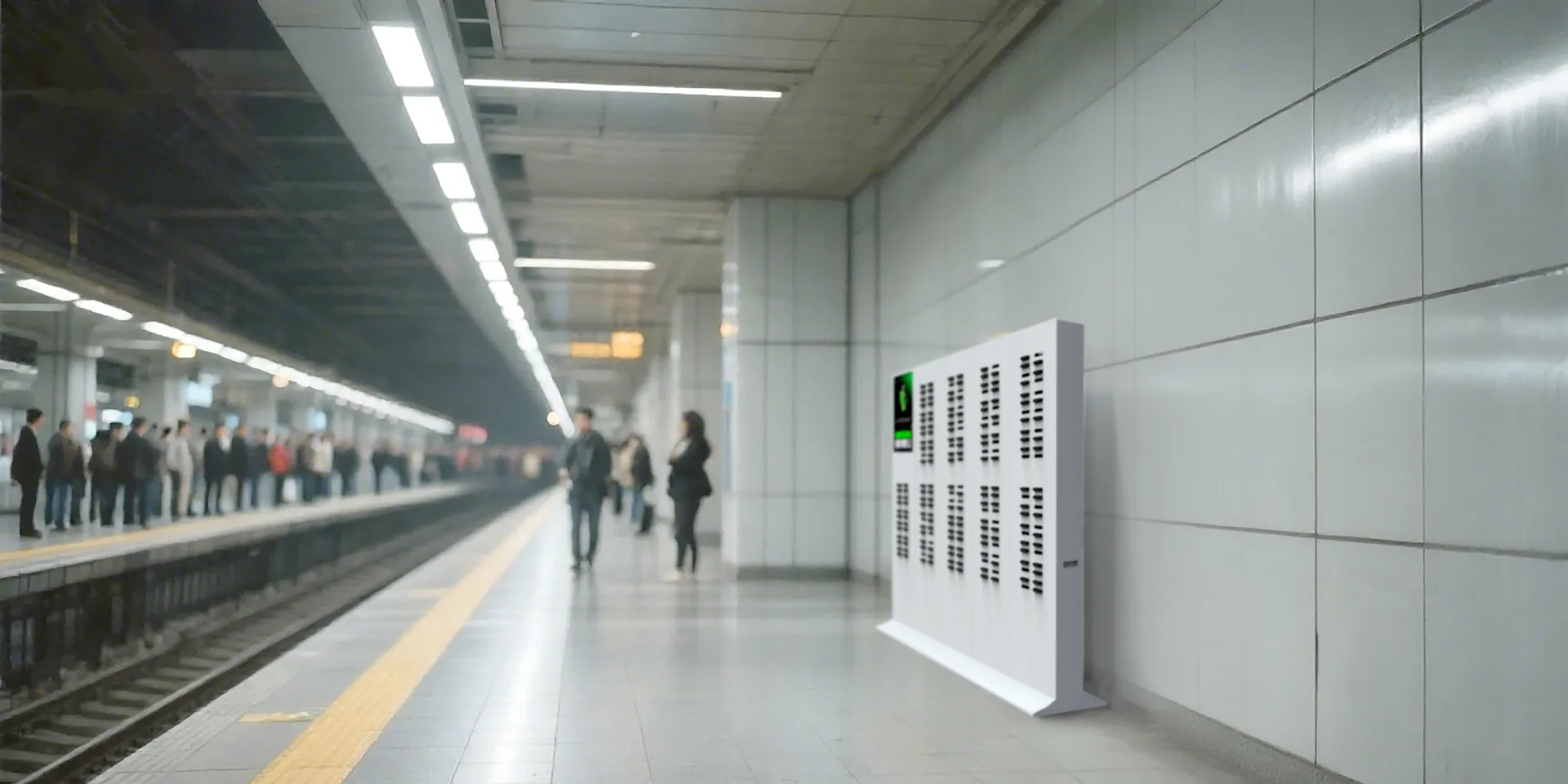
Optimize deployment strategies based on venue characteristics to enhance user experience and operational efficiency. For outdoor environments such as parks and festivals, use waterproof charging stations to adapt to weather conditions. In nightlife venues like bars, use illuminated lightbox stations to improve visibility.
In transportation hubs such as airports, deploy stations that support multiple rental methods, including QR code scanning, app-based rental, card payment, and NFC (Apple Pay / Google Pay / Samsung Pay), allowing users to choose their preferred method for a seamless experience.
By tailoring deployment strategies to spatial conditions and traffic characteristics, operators can achieve efficient coverage and maximize the effectiveness of the power bank sharing business.
Differentiated pricing strategies to maximize profitability:Different scenarios have varying user needs and willingness to pay, requiring differentiated pricing strategies.
High-traffic scenarios: Airports, music festivals, and similar venues have strong demand and high willingness to pay. Based on operational data, pricing at airports can be set at $3–$10. In subways, affordability is key, so pricing at $1–$2 can drive high-frequency usage and generate significant revenue.
Medium-traffic scenarios: Restaurants and shopping malls can set prices at $2–$3, with free usage periods to lower barriers and attract users.
Low-traffic scenarios: Dessert shops and cafés can adopt low pricing ($1–$2) to cultivate user habits and increase device turnover.
During peak periods such as holidays and events, moderate price increases can be applied. Daily caps for long-duration rentals can encourage extended usage and increase revenue per order. Subscription or package pricing (per use/day) can lock in frequent users and increase rental frequency. Operators can also issue coupons (time discounts) to attract new users and expand the user base.
Data-driven deployment and revenue optimization:Through the operation management system, operators can monitor real-time device performance (rental frequency, device utilization, etc.). By analyzing user and location profiles, operators can identify high-performing locations and optimize deployment strategies.
With data insights, operators can make scientific decisions: increase the number of devices in high-demand locations, and reduce or replace equipment in low-performing ones.
Conclusion
By identifying high-value locations for power bank charging stations and adopting differentiated deployment strategies based on spatial conditions and traffic characteristics, operators can achieve efficient coverage for phone charging vending machines.
In space-constrained venues, use display racks; in medium-traffic locations, deploy modular stations; in high-traffic venues, install large-capacity devices (72/96/216 slots). For outdoor environments, use waterproof stations; for nightlife venues, deploy illuminated machines. Matching the right equipment to the right scenario significantly improves device turnover.
By leveraging the operation management backend and deeply analyzing rental data, operators can optimize deployment and resource allocation. Increasing devices in high-demand areas and reducing or upgrading underperforming locations allows for better network planning, faster profitability, and shorter payback periods.
March 19, 2026
 What components are included in a complete power bank station solution?
 The era of 9-minute fast charging is coming—does it pose a threat or an opportunity for the mobile charging station industry?
 Investment Return Analysis: How Long Does It Take for Your Portable Charging Station Business to Become Profitable?
 What strategies can increase the revenue of a cell phone charging station?
 Global Phone Charging Station Market Trends and Growth Forecast for 2026
 How to correctly choose a power bank rental factory?