What key indicators should you focus on when testing fast-charging power bank samples?
With the global penetration of smartphones, the explosive growth of mobile payments and short-form video, people are using their phones more frequently than ever. As a result, battery consumption is increasing rapidly, making mobile charging a rigid demand. Across different countries, whether in tourism, business, outdoor activities, or daily commuting, users have an increasingly urgent need for convenient charging solutions.
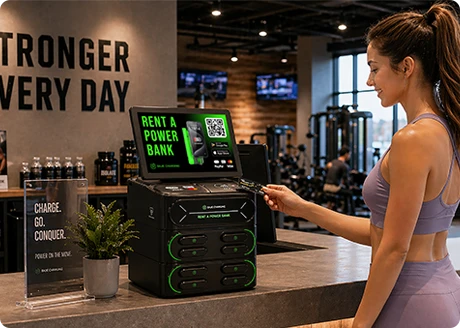
Many people want to start a mobile phone charger station business locally, but before large-scale deployment, they usually order samples for testing. So, what key indicators should be evaluated to decide whether to cooperate with a power bank kiosk factory and move into mass production?
1. How to test portable battery power station samples?
Different rental methods – whether rental works properly:Test whether the device can be rented successfully through multiple methods such as APP QR code scanning / camera scanning / NFC (Apple Pay / Google Pay / Samsung Pay) / bank cards and credit cards. Check whether the phone charging vending machine can release a power bank normally. Diverse rental methods can adapt to different user habits and help increase rental frequency.
Network connection – stability in different environments:Place the shared power bank in different signal environments such as shopping malls, convenience stores, and outdoor areas to test the stability of device-server data synchronization. Check whether the power bank can be released normally when using scanning or card payment. During rental, usage, and return stages, verify whether the backend system displays data correctly.
Under WIFI/4G conditions, observe whether there are issues such as data desynchronization, timeout, no response, or duplicate charges. In offline mode, test whether users can still return the power bank normally, and whether order data is automatically synchronized once the network is restored.
Payment processing – whether orders can be successfully :harged:Pre-authorization payment (freeze an amount at rental, deduct actual fee after return, and release the remaining balance). Deposit payment (deduct deposit from platform balance, settle fees after return, and refund remaining balance).
Incremental pre-authorization: When the usage time extends and the cost exceeds the initial frozen amount, the system should automatically increase the pre-authorized amount, deduct the actual fee, and release any remaining balance.
Bind bank card + post-payment after return:No deposit is required. Users only need to bind a bank card for verification, and the system directly deducts the rental fee after the return.
Deposit prepaid + rental paid afterward:Users first pay a deposit to the platform. After returning the power bank, they manually pay the rental fee, and the deposit is refunded in full.
Billing accuracy:Check whether the billing time is correct from the moment the power bank is released to the successful return. Ensure there are no issues such as early charging or delayed stop time. Verify whether daily price caps function correctly. Use multiple accounts to test and compare backend logs to confirm that billing amounts match usage records, and that there are no missing or duplicate orders.

2. What hardware conditions must shared power banks meet?
Product quality and safety assurance:Shared power banks are used frequently and require repeated charging and discharging. If product quality is inadequate, it may lead to overheating or even fire hazards. Since devices are placed in public environments for long periods, they must be resistant to high temperatures and humidity to reduce risks.
Due to high usage frequency, issues such as battery aging, false capacity, and casing damage can occur. Using industrial-grade battery cells can increase cycle life and extend product lifespan. Durable, shock-resistant materials can better withstand intensive usage scenarios, reducing equipment damage and lowering long-term operational costs.
International standards and compliance: Shared power banks should comply with major global certifications such as CE / CB / FCC / RoHS / UKCA to ensure safety in electrical performance, electromagnetic compatibility, and hazardous substance restrictions. Certification helps avoid legal risks when entering target markets.
Meeting multi-country certification requirements enables operators to quickly adapt to regulatory policies in different regions, shorten market entry cycles, and enhance trust among customers and partners—becoming a key advantage for long-term business operations.
3. What standards are required for long-term operation of portable battery power stations?
A battery station should support functions such as cabinet monitoring, battery monitoring, rental alerts, franchise management, and operational data analysis to ensure long-term business sustainability.
Through a technical platform, operators can efficiently manage all cabinets and power banks, covering the entire lifecycle from installation and debugging to maintenance and updates. The system records cabinet locations, deployment quantities, and maintenance status in real time, helping operators respond quickly to market demand.
The platform can monitor device status and rental activity in real time, track online/offline status, available inventory, and abnormal orders. It can automatically detect faults, helping operators identify and resolve issues quickly, improving operational efficiency.
Multi-dimensional management includes: Cabinet monitoring: Real-time tracking of device status, alarm monitoring, visualized dashboards, multi-dimensional reports, slot fault detection, and online/offline statistics.
Battery monitoring: Tracking battery level, health status, charging cable condition, temperature, cumulative usage time, and revenue. Real-time alerts enable preventive maintenance.
Full rental process alerts: Covering battery faults, empty slots, low power, positioning anomalies, cabinet offline status, payment cancellation, payment failure, ejection failure, and return failure.
The system can proactively warn about potential failures, quickly locate root causes, reduce maintenance time, and lower operational costs—supporting continuous business growth.
Summary
When testing shared power bank rental station samples, verify whether multiple rental methods such as APP scanning, camera scanning, NFC, and card payments function properly. Test network stability and data synchronization in different signal environments, and ensure backend status management is accurate throughout the rental process without abnormalities.
Different payment methods must be tested, including pre-authorization, deposit deduction, incremental authorization, bank card binding with post-payment, and deposit prepaid with rental post-payment.
Billing accuracy should be verified from rental start to return completion to avoid early or delayed charging. Confirm that features such as daily price caps work correctly. Use multiple accounts for comparative testing to ensure accuracy and reliability of the phone charger machine system.
April 30 2026
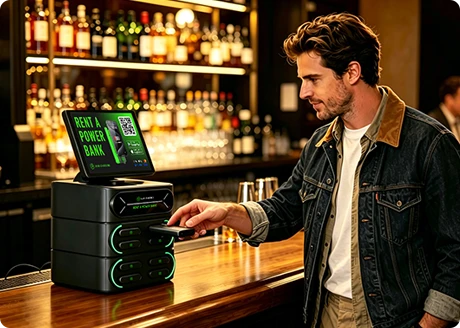 Which User Groups Are More Likely to Use Phone Charging Stations?
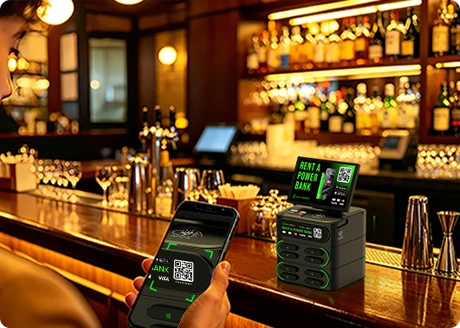 How to Succeed in the Netherlands Phone Charging Station Market?
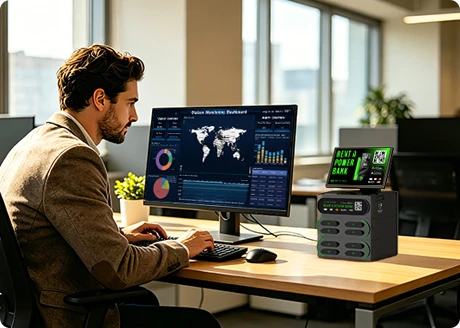 How can a power bank portable charger SaaS cloud platform achieve intelligent management for millions of devices?
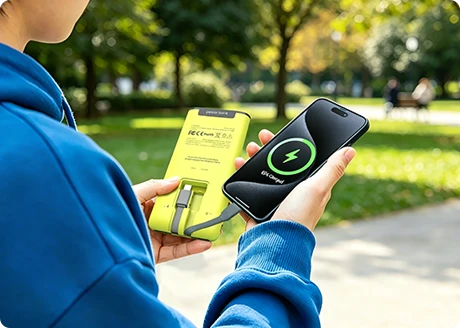 How can fast-charging commercial power bank stations help operators attract more users?
 Why Are European and American Markets Accelerating the Deployment of Mobile Phone Charging Stations?
 What key indicators should you focus on when testing fast-charging power bank samples?